

Shimmer UX Audit: Sensitive Questions Asked Before Trust
This is a short, self-directed teardown of Shimmer — a publicly available product we picked ourselves, not a commissioned client audit.
Shimmer is a coaching app. Its onboarding flow collects a new user’s age, ADHD-diagnosis status, and a mental-health screening, including questions related to suicidal ideation, before matching them to a coach.
Onix titled this teardown an “Onboarding Sequencing & Duty-of-Care UX Audit,” hinging on one line drawn from the report itself: “Rethinking the order and ending of a sensitive onboarding flow.” The two findings below follow the report’s own order. Both are about the sequencing of this flow, not the questions or the people answering them.
Problem 01
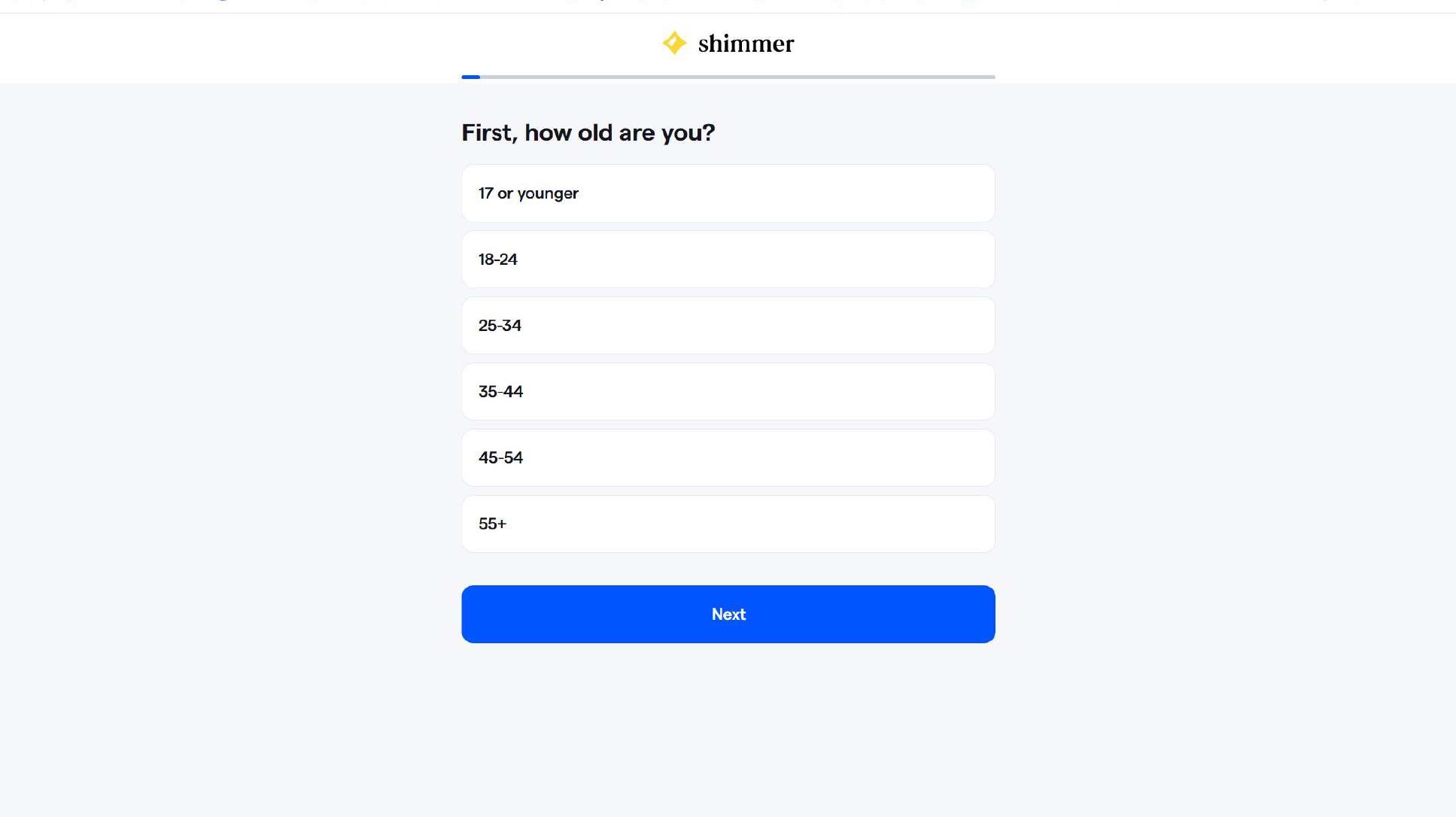
Immediately after “Get Started,” users are asked their age and their ADHD diagnosis status, before any explanation of why this information is needed or how it will be used.
Why it matters
For a product handling personal health information, asking for sensitive disclosures before establishing trust or showing value creates hesitation right at the first step, exactly where drop-off is most costly.
Improvement
Register users with a few generic questions first, then give them access to lower-commitment parts of the platform like an articles or community, before requesting sensitive personal data. This keeps users engaged and reachable even if they don’t complete the full onboarding sequence, rather than losing them entirely mid-flow with no way back in.
Business impact
- Reduces first-step abandonment
- Keeps unconverted users reachable (email, content engagement) instead of losing them completely
- Builds trust progressively instead of front-loading it
Problem 02
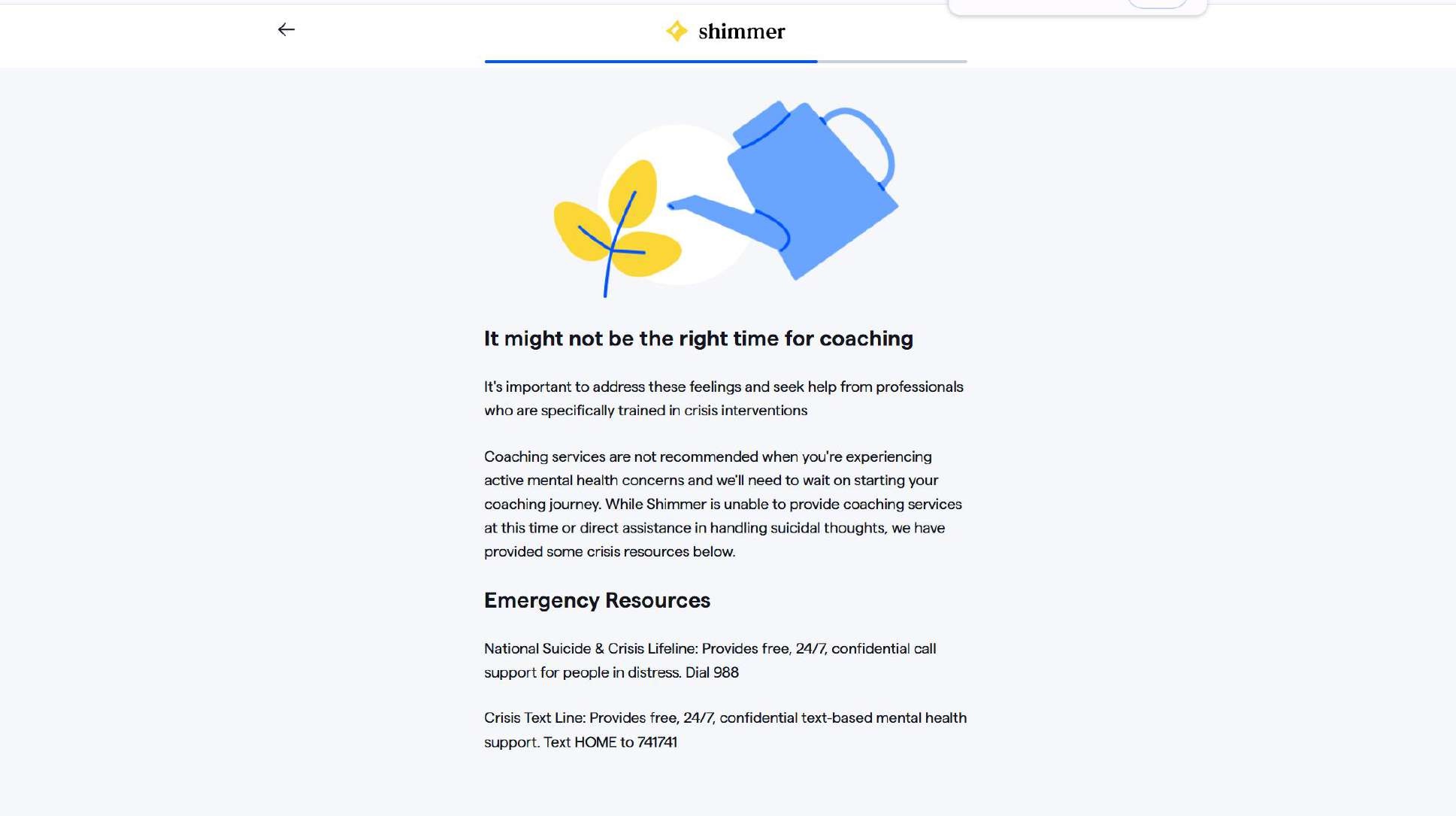
Eligibility-determining questions — the mental health and suicidal ideation screening — appear only at the very end of a long sequence (20+ questions covering goals, challenges, and detailed coach-matching preferences).
Why it matters
Users invest significant time and real emotional effort answering deeply personal questions before discovering, right at the finish line, that they may not qualify for the service at all.
Improvement
Move eligibility/screening questions earlier in the flow, immediately after the minimum context needed to ask them, so unqualified users are redirected before investing in the full personalization and coach-matching sequence.
Business impact
- Protects users from unnecessary emotional investment
- Reduces wasted funnel spend on users who won’t qualify
- Preserves a positive impression even for users who are redirected
Executive summary
Shimmer’s onboarding is thoughtful in places, but the current sequencing asks for trust before it’s earned, places eligibility screening after significant emotional investment, and ends the highest-stakes disclosure in the flow with a passive, generic dead-end.
Key opportunities
- Earn trust before asking for it — Explain why sensitive data is needed before requesting it.
- Screen early, personalize later — Move eligibility questions ahead of the lengthy preference-matching sequence.
Want this for your own product?
This is a short, self-directed teardown of a publicly available product. We picked Shimmer ourselves to review — we weren't hired to audit it, and it isn't a client of ours. A commissioned UX audit goes further: it's scoped to your product's own goals and flows, not just what's visible to an outside visitor.
Want the same kind of review for your own product? See our mobile app UX audit page for what's included, or browse more examples to see other teardowns.